

Strengthen & Protect Your Teeth with Dental Crowns
A crown is a tooth-shaped “cap” placed over a tooth to restore its shape, size, and strength and improve its appearance. When cemented into place, the crowns fully encase the entire visible portion of a tooth that lies at and above the gum line.
Crowns can be made of porcelain, metal, or both. Porcelain crowns are most often preferred because they mimic the translucency of natural teeth and are very strong.
Dental Crown Procedure
Crowns or onlays (partial crowns) are needed when insufficient tooth strength remains to hold a filling. Unlike fillings, for which the restorative material is applied directly to the tooth, a crown is fabricated in a dental laboratory.
Your crown is created based on an impression of your tooth, which allows a dental laboratory technician to examine all aspects of your bite and jaw movements. The crown is then sculpted just for you so that your bite and jaw movements function normally once it is placed.
Before placing a crown, our dentists may have to remove decay or old fillings. After the tooth is prepared, the crown is cemented over your prepared tooth.
Crowns are sometimes confused with veneers, but they are pretty different. Veneers are typically only applied to the visible part of the tooth, while a crown covers the entire tooth. Crowns can be an effective solution to strengthen the core structure of your tooth.
What Are the Most Common Types of Crowns?
- Porcelain Crowns
Porcelain crowns are popular due to their natural look and aesthetic appeal. They are also very durable and stain-resistant. Porcelain crowns can be made from only porcelain or a mix of metal and porcelain.
- Zirconia Crowns
Zirconia crowns are made from a strong ceramic material. They are known for being extremely durable and long-lasting, and for their natural look.
- Gold Crowns
Gold alloy crowns are made from a combination of gold and other metals. They are very strong, durable, and highly resistant to corrosion.
- Metal Crowns
Metal crowns are made from an alloy such as nickel or chromium. They are powerful and durable, but they are not as aesthetically pleasing as other types of crowns.
- Ceramic Crowns
Ceramic crowns are made from a material similar to porcelain. They are strong and durable, but not as strong as zirconia crowns.
- Porcelain-Fused-To-Metal Crowns
Porcelain-fused-to-metal crowns are made from porcelain that is fused to a metal base. This type of crown is stronger than all-porcelain crowns but not as durable as zirconia crowns.
What Are The Advantages of Dental Crowns?
Dental crowns have many advantages, including:
- Restoring the appearance and function of damaged teeth
- Strengthening weak or decayed teeth
- Improving the appearance of discolored or misshapen teeth
- protecting a tooth from further damage
- Supporting a tooth with a large filling when there isn’t enough tooth structure remaining
- Covering dental implants
- Anchoring a dental bridge
- Holding together parts of a cracked tooth
What Are Crowns Used For?
A crown is a cap placed over a tooth to restore its shape, size, strength, and appearance. It is cemented in place over the visible portion of the tooth or on top of a dental implant. Crowns can be made from various materials, including porcelain, gold, metal alloys, or a combination of these. Porcelain crowns are a popular cosmetic dental procedure because they match the natural color of teeth while providing strength and durability.
Dental crowns repair teeth that have been broken, weakened by decay, or have an extensive filling. They are also used to anchor bridges, cover dental implants, and improve the appearance of misshapen or severely discolored teeth.
Our dentist may recommend a crown as a cosmetic treatment to:
-
Protect a weak tooth from breaking or hold together parts of a cracked tooth
-
Restore a broken or worn tooth
-
Cover and support a tooth with a large filling when there isn’t much tooth structure left
-
Hold a dental bridge in place
-
Cover misshapen or severely discolored teeth
-
Cover a dental implant
-
Cover a tooth treated with root canal therapy
How Long Do Crowns Last?
On average, dental crowns last between five and 15 years. The life span of a crown depends on how much wear and tear the crown takes, how well you follow good oral hygiene practices, and your personal oral habits.
Avoid chewing on complex objects like ice or popcorn kernels to help your crown last longer. Also, if you grind your teeth at night, talk to our dentist about getting a mouthguard to protect your teeth. If you take good care of your crown, it can last many years.
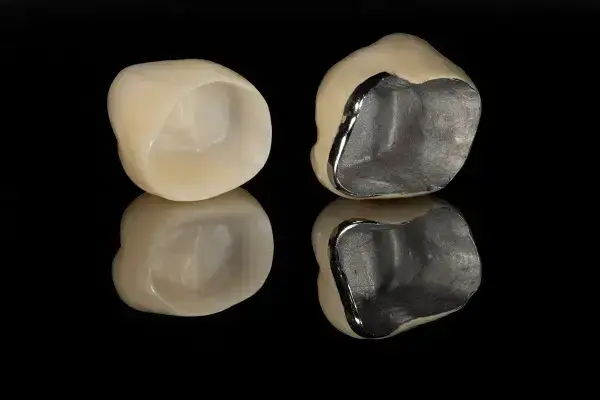
Our dental crowns are crafted from high-quality materials to provide strength, durability, and a seamless look. Pure Dental welcomes patients from Woodbridge, Lake Ridge, VA, and surrounding areas. Call us today at (571) 677-4207 to book your visit.