

Posted by Pure Dental | Jan 24, 2025
Losing even one tooth can affect how you eat, speak, and smile with confidence. If you’re missing several teeth, you may be wondering whether dental implants can actually solve the problem or if they’re only meant for replacing a single tooth.
The good news? Dental implants are one of the most versatile tooth replacement options available today. Whether you’re missing one tooth, several teeth, or an entire arch, there’s likely an implant solution designed for your exact situation.
At Pure Dental in Woodbridge, VA 22192, patients often come to us with this exact question. In this guide, we’ll break down how many missing teeth can be replaced with dental implants, the different treatment options available, and how to know which one is right for you.
Understanding Dental Implants: A Quick Overview
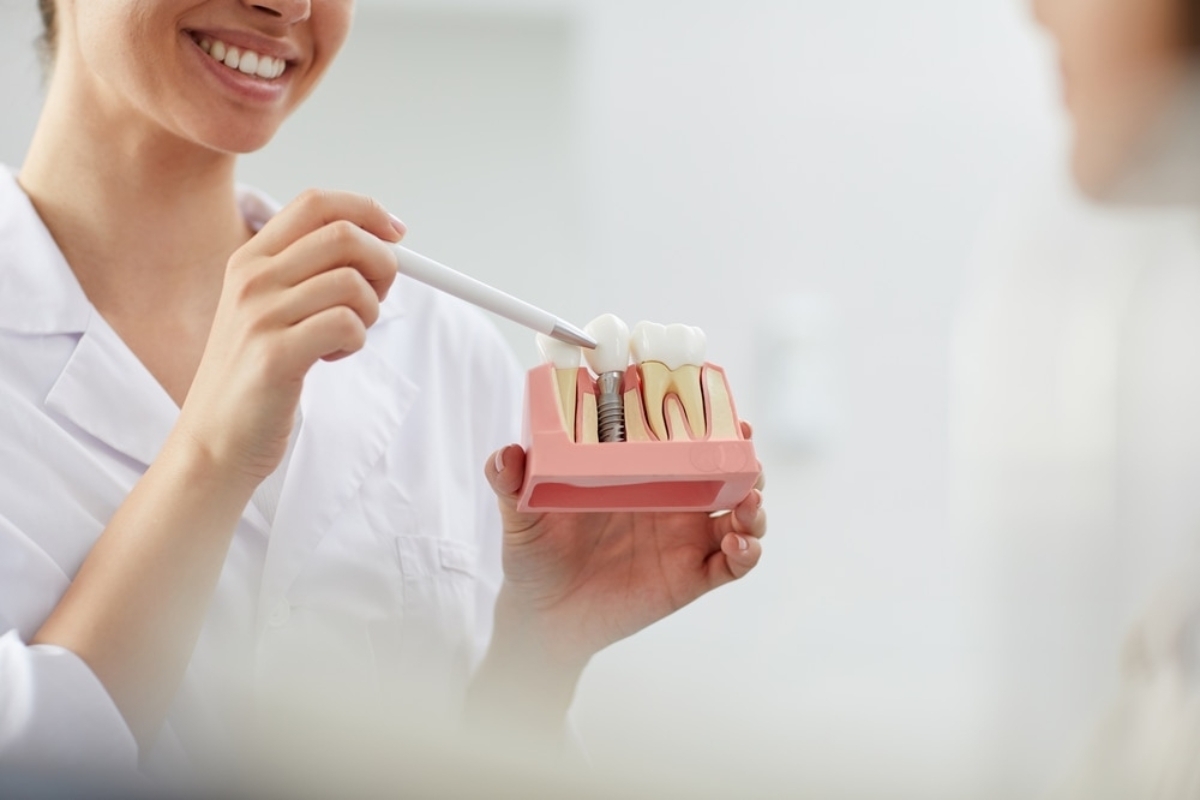
Dental implants are small titanium posts surgically placed into the jawbone. They act as artificial tooth roots, providing a sturdy foundation for a replacement tooth, bridge, or full denture.
Unlike traditional dentures, dental implants fuse with the jawbone over time through a process called osseointegration. This creates a stable, long-lasting result that looks and functions like natural teeth.
Because of this flexibility, dental implants can be customized to replace:
- A single missing tooth
- Several missing teeth in a row
- An entire arch of missing teeth (upper, lower, or both)
How Many Teeth Can Dental Implants Replace?
Replacing a Single Missing Tooth
If you’re missing just one tooth, a single dental implant with a crown on top is typically the go-to solution. This approach:
- Doesn’t require altering neighboring healthy teeth
- Prevents bone loss in the area of the missing tooth
- Blends naturally with your smile
Replacing Multiple Missing Teeth
For patients missing two or more teeth, there are a few effective options:
- Implant-supported bridge: Two implants anchor a bridge that replaces three or more consecutive missing teeth, reducing the total number of implants needed.
- Multiple single implants: Ideal when missing teeth aren’t next to each other.
This approach is often more conservative than placing an individual implant for every missing tooth, while still restoring full chewing function.
Replacing a Full Arch of Missing Teeth
Patients missing most or all of their teeth in one or both jaws don’t need an implant for every single tooth. Instead, dentists commonly recommend:
- All-on-4 or All-on-6 dental implants: A full arch of replacement teeth supported by just four to six strategically placed implants.
- Implant-supported dentures: A removable or fixed denture secured by a small number of implants for improved stability compared to traditional dentures.
These techniques allow patients with extensive tooth loss to regain a full, functional smile without needing dozens of individual implants.
Factors That Determine How Many Implants You Need
The right number of dental implants depends on several individual factors, including:
- Jawbone density and health: Adequate bone is needed to support implants.
- Location of missing teeth: Front teeth and molars have different support needs.
- Overall oral health: Gum disease or other conditions may need treatment first.
- Budget and treatment goals: Some patients prioritize a fixed solution, while others prefer a removable one.
A thorough evaluation, including X-rays and a discussion of your goals, helps determine the most effective and efficient treatment plan.
Why Choose Dental Implants Over Other Options?
Compared to traditional bridges or dentures, dental implants offer several long-term advantages:
- Improved chewing ability and speech
- Prevention of jawbone deterioration
- A natural look and feel
- Long-term durability with proper care
For many patients, this makes dental implants a worthwhile investment in both oral health and quality of life.
Finding the Right Dentist for Your Dental Implants
Because every patient’s mouth and needs are different, working with an experienced dental team matters. A skilled dentist will evaluate your bone structure, gum health, and the number of missing teeth to recommend a personalized implant plan rather than a one-size-fits-all solution.
If you’re searching for a trusted dentist Woodbridge patients rely on for implant consultations, choosing a practice with experience in both single-tooth and full-arch implant solutions can make the process smoother and more predictable.
Conclusion: Your Smile Deserves a Personalized Solution
Whether you’re missing one tooth or several, dental implants offer a flexible, long-lasting way to restore your smile and confidence. From single implants to full-arch solutions like All-on-4, there’s likely an option tailored to your needs.
The best way to find out how many implants you may need is through a personalized consultation with a qualified dental team.
Contact us today for an appointment at Pure Dental in Woodbridge, VA 22192, and take the first step toward a healthier, more confident smile.
Common Questions Patients Ask About Dental Implants
Can I get dental implants if I’m missing most of my teeth?
Yes. Options like All-on-4 or implant-supported dentures allow patients with extensive tooth loss to replace a full arch using just a few implants.
Is there a limit to how many teeth can be replaced at once?
Not really. With modern techniques, dentists can replace anywhere from one tooth to a full set using a combination of implants, bridges, or full-arch appliances.
Do I need a separate implant for every missing tooth?
Usually not. Implant-supported bridges and full-arch solutions let multiple teeth be replaced using fewer implants than the number of missing teeth.
How do I know if I have enough jawbone for implants?
Your dentist will typically take X-rays or a 3D scan to assess bone density. If bone loss has occurred, a bone graft may be recommended before implant placement.
How long does the dental implant process take?
Timelines vary, but the full process from placement to final restoration often takes a few months to allow proper healing and bone integration.
Are dental implants a good option for older patients?
Age alone usually isn’t a barrier. What matters most is overall health and bone quality, both of which your dentist will evaluate during a consultation.
More Blog Posts
How to Evaluate Cosmetic Dentistry Before Booking an Appointment
Thinking about a smile makeover but not sure where to start? You’re not alone. Every year, thousands of patients search for cosmetic dentistry options, only to feel overwhelmed by choices, pricing, and conflicting advice online. The truth is, choosing the right provider matters just as much as the procedure itself. A rushed decision can lead to disappointing results, unnecessary costs,
Dental Implant or Extraction? What Happens After a Severely Damaged Tooth?
A cracked molar at midnight. A toothache that won’t quit. A dentist’s chair conversation that suddenly turns serious “This tooth may need to come out.” If you’ve been there, you know the next question hits hard: what happens now? When a tooth is severely damaged from decay, trauma, or infection you’re usually left with two paths: save what’s left, or
Different Types of Dental Implants: Which Option Is Best for Your Needs?
Missing teeth can affect more than just your smile they can impact how you chew, speak, and feel about yourself. If you’ve been researching solutions, you’ve likely come across dental implants as one of the most reliable, long-term options available today. But did you know there isn’t just one type of dental implant? Choosing the right option depends on your
Why Regular Dental Checkups Matter Even When Your Teeth Feel Fine
You brush twice a day, floss most nights, and nothing hurts. So do you really need to see a dentist? Yes, and the reason surprises many people. Most dental problems stay silent until they’re advanced. If you’re searching for a dentist Woodbridge residents trust, the best time to book is when your teeth feel fine, not when they start to
Why Dental Implant Abutments Are an Important Part of Treatment
Most people picture a dental implant as a metal post with a tooth on top. That’s mostly right, but it skips a small component that does a lot of the work. Dental Implant Abutments are the connectors that join the implant in your jawbone to the crown you see when you smile. When the abutment is well chosen and fitted,